
LNG Canada is expanding to 28 million tonnes a year, Ottawa’s new budget is backing it, and a Blackstone-led group with four Canadian pension funds just committed US$3.1 billion. Every new tonne is aimed across the Pacific.
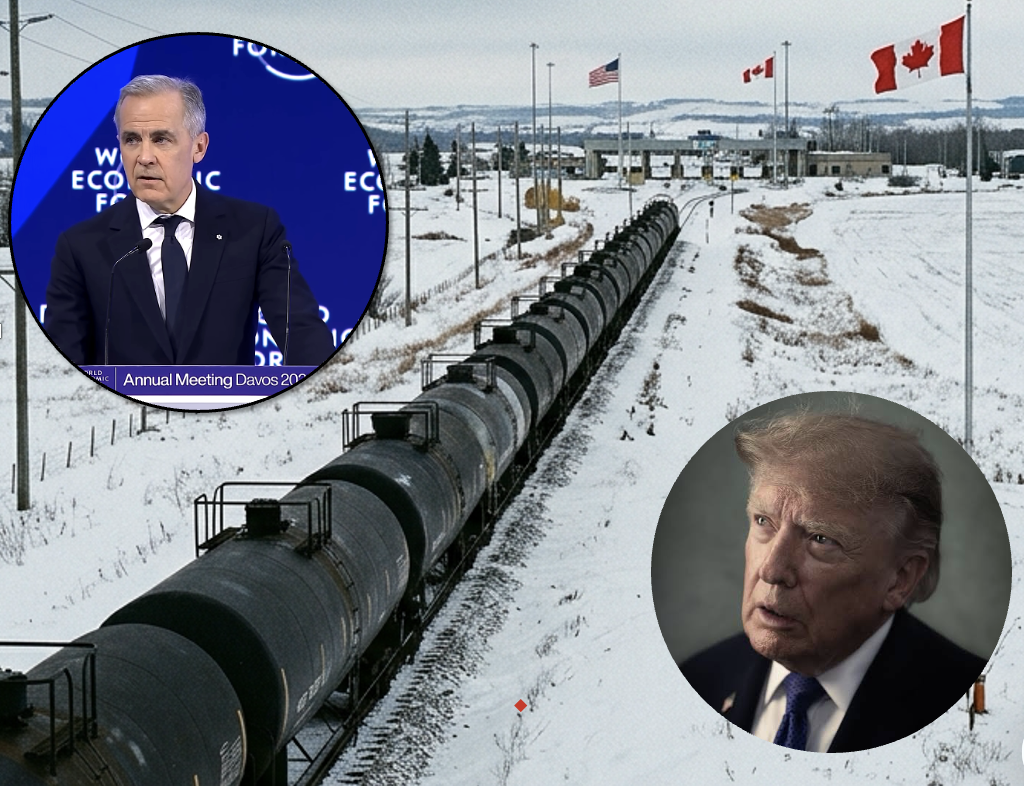
In January 2025, as he prepared to hit Canada with tariffs, Donald Trump told the world what he thought of Canadian energy.
“We don’t need their oil and gas,” he said. “We have more than anybody.”
Twenty-two months later, Canada is building to sell a great deal more of its gas, just not to the United States.
On the northern coast of British Columbia, at Kitimat, sits LNG Canada, the country’s first large-scale terminal for exporting liquefied natural gas. It shipped its first cargo in 2025. In late September, its owners approved a second phase that will double its capacity, from 14 to 28 million tonnes a year.
On Thursday, Ottawa’s new federal budget named the expansion among its major energy priorities.
And on Monday, a group led by Blackstone, the American investment giant, and four of Canada’s largest pension funds committed US$3.1 billion to a stake in the project.
The gas is going west.
A terminal built for Asia
LNG Canada was designed with one market in mind. It is on the Pacific coast, with no pipeline route to the United States. Its owners are a list of the energy giants of Asia and Europe:
- Shell (Britain): 40%
- Petronas (Malaysia): 25%
- PetroChina (China): 15%
- Mitsubishi (Japan): 15%
- Korea Gas (South Korea): 5%
When Shell announced the decision to expand, its integrated gas president, Cederic Cremers, said the project was “helping to supply LNG to customers in Asia,” stressing the importance of energy diversity and energy security.
Phase 2 will add two new production units at Kitimat. Commercial operations from the expansion are expected in the early 2030s. Shell alone expects to receive nearly six million tonnes a year of the additional gas.
For Canada, that is the point. For decades, almost all Canadian natural gas exports went south by pipeline to a single customer, the United States, at whatever price that customer would pay. A Pacific terminal changes the equation. It lets Canadian gas compete in the world’s largest LNG markets, in Japan, South Korea, China and across Southeast Asia, where energy security has become a national priority.
The federal budget tabled Thursday makes clear that Ottawa sees this as part of a broader shift. Alongside the LNG expansion, it backs Pacific Link, a proposed 1,250-kilometre oil pipeline from Alberta to the B.C. coast that would carry about one million barrels a day for export, with a minimum ten per cent Indigenous ownership stake. Finance Minister François-Philippe Champagne described the budget’s purpose plainly: “It’s not about them. This is about us, regaining our ability to build.”
Following the money
The clearest signal came from investors.
On the second of November, Blackstone announced a US$3.1 billion investment in Mitsubishi’s share of LNG Canada. The group is led by Blackstone’s credit and insurance funds, and includes four major Canadian institutions:
- CPP Investments, which manages the Canada Pension Plan
- OMERS, the Ontario Municipal Employees Retirement System
- IMCO, the Investment Management Corporation of Ontario
- PSP Investments, which manages pensions for federal public servants, the military and the RCMP
Together, they are taking a 49.9 per cent non-controlling stake in the Mitsubishi subsidiary that holds its 15 per cent of LNG Canada, giving them an indirect interest of roughly 7.5 per cent in the terminal. According to the Globe and Mail, US$1.6 billion of the money pays for equity, and US$1.5 billion will help fund the expansion. Mitsubishi keeps control, and says its customers and volumes are unchanged.
CPP Investments called LNG Canada “a high-quality, globally strategic asset.”
The deal came as Shell, the project’s largest owner, reportedly stopped trying to sell part of its own stake. Shell has been doubling down on Canadian gas this year, including its US$16.4 billion purchase of Calgary-based ARC Resources, one of the country’s largest natural gas producers.
Not everyone is applauding. Richard Brooks of the environmental group Stand.earth said Canadians should be “extremely alarmed” to see their pension money going into LNG. Whether more gas exports fit with Canada’s climate commitments will remain a live argument as the expansion is built.
But the commercial verdict is hard to miss. The world’s largest alternative asset manager, Canada’s biggest pension funds, a British energy major and Asia’s leading energy companies are all putting money into the same bet: that Canadian gas has a long future in Asia.
Trump said America doesn’t need Canada’s gas.
The rest of the market is saying something different, and building a terminal on the Pacific to prove it.
Sources
- Shell takes FID to double LNG Canada capacity to 28 MMtpa — World Oil, 29 September 2026
- LNG Canada’s JV partners take final investment decision in Phase 2 — IREI
- Blackstone and leading Canadian institutional investors announce $3.1B investment in Mitsubishi Corporation’s interest in LNG Canada — Blackstone, 2 November 2026
- Blackstone, Canadian pension funds commit US$3.1 billion to Mitsubishi’s LNG Canada unit — The Hub, 3 November 2026
- Blackstone-led group buys into Mitsubishi subsidiary that holds LNG Canada stake — BNN Bloomberg, 2 November 2026
- Canada’s 2026 federal budget: $289 billion in deficits, major energy investments — EnergyNow, November 2026
- Federal budget is about “changing Canada’s growth model,” finance minister says — The Canadian Press / paNOW, 2 November 2026