
A Republican senator in a tight race got relief for Maine. The same day, the White House put new 50% tariffs on shampoo, cocoa and canoes, and Trump called tariffs his “favourite word.”
Ten days before the US midterm elections, Donald Trump is lifting some of his tariffs on Canadian goods. The pressure came from inside his own party.
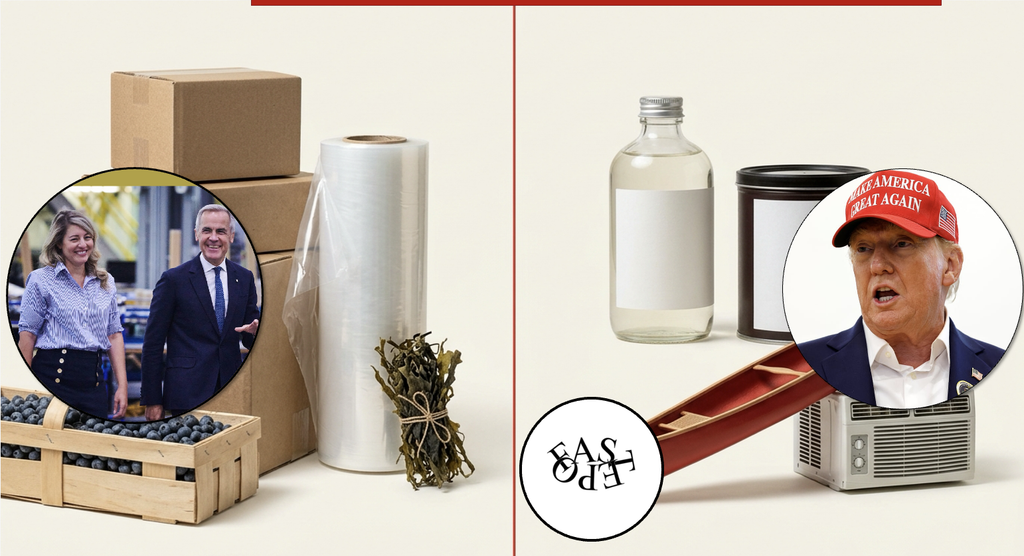
On Friday, Maine Republican Senator Susan Collins announced that the administration will scrap the 50% tariffs on a list of Canadian products her state depends on. The list includes:
- Packaging: some paper and plastic products
- Equipment: refrigeration and packaging equipment
- Farming: agricultural machinery
- Coastal products: seaweed and algae products
Trump imposed those tariffs in August under Section 338, a 1930 trade law he turned to after the US Supreme Court struck down his emergency tariffs in February. At the time, the White House presented them as retaliation for Canada’s countermeasures.
Collins said the products are “essential” to Maine businesses and farms and cannot easily be replaced with American alternatives. She gave two examples:
- Blueberries: Maine’s blueberry growers rely on specialized Canadian-made harvesting boxes that work with their existing processing equipment.
- Cardboard totes: an American supplier of the totes widely used in agriculture recently stopped making them, “leaving producers with no choice but to turn to Canada.”
“I will continue working directly with administration officials to seek additional relief and encourage a broader trade agreement with Canada, our neighbour, ally and largest trading partner,” Collins said.
The politics are hard to miss. Collins, a 30-year Senate veteran, is in a tight re-election race against Democrat Troy Jackson, who has made Trump’s trade war with Canada a centrepiece of his campaign. She had already pushed the administration to drop tariffs on Canadian road salt, which her state needs every winter.
She isn’t the only Republican breaking ranks. In Michigan, Republican Senate candidate Mike Rogers has publicly called for an end to the trade war, saying the tariffs have raised prices at a time when inflation is already high. According to CBC News, polls show Trump’s dispute with Canada is deeply unpopular among voters in both major parties.
Relief with one hand, new tariffs with the other
This isn’t a retreat across the board. On the same day, the White House published a six-page list of Canadian products facing new 50% Section 338 tariffs, “to continue addressing Canada’s discriminatory treatment of U.S. commerce.” The new list includes:
- certain valves, carpets and waste products
- shampoos and cocoa powder products
- window air-conditioning units
- archery equipment
- canoes shorter than 7.5 metres
So Maine’s blueberry growers get their boxes back, while American families buying a canoe or a window air conditioner from Canada will pay more.
Trump’s message was just as mixed. He claimed Canada “very much wants to make a deal” and repeated that Canada makes “$90 billion a year” from the United States. His own trade representative puts the US goods deficit with Canada at US$48.3 billion, much of it driven by American refineries buying Alberta oil at a discount to world prices. The United States also runs a surplus with Canada in services.
At a rally in Fort Myers, Florida, the same day, Trump said “tariffs” is still his “favourite word” because they’ve “made us rich.”
The relief also leaves the biggest tariffs in place. The changes Collins announced cover Section 338 tariffs on specific products. They don’t touch the separate Section 232 tariffs on Canadian steel, aluminum and autos, which hit Canada’s largest exports, or the duties on softwood lumber, where most Canadian producers now pay 34.75%.
That is the real question after Friday. If one senator in a close race can get tariffs lifted on blueberry boxes and seaweed, can senators and governors in states that depend on Canadian aluminum and auto parts do the same? Nothing announced so far suggests aluminum or auto tariffs are under review.
Ottawa, for its part, isn’t in a hurry. Speaking in Istanbul during his visit to Türkiye, Prime Minister Mark Carney said Canada is open to a deal that protects Canadian interests, but on its own timeline.
“We could sign it this afternoon if the U.S. were there,” Carney said. “If it has to be months from now or longer than that, or another administration, before a proper deal comes into place, we will do that.”
Sources
- CBC News, “Trump to swap some tariffs on Canadian goods amid midterm pressure,” by John Paul Tasker, 23 October 2026
- Sen. Susan Collins, social media statement, 23 October 2026
- The White House, Section 338 tariff list on Canadian products, 23 October 2026
- Office of the US Trade Representative, US–Canada trade figures